WEEKLY SOUTHERN ARTS
"Sometime the boogaloo 
  • Home
  • Guns, Faith and Murder
  • The Million Dollar Store
  • Artistic Con-cepts
  • Judy Garland - "Soul Singer"
  • Robert & Jimi and the Twenty Seven Blues
  • The Great Pretenders
  • Imagine
  • Me and Junior Parker
  • The Republican
  • Sweet Home Chicago (The Obama Shakedown)
  • The Ballad of Hunter & Joe
  • The 22-yr-old Bottle Blonde
  • Is It Alright...To Be White?
  • Resist the Devil and He Will Flea
  • Music & Reminiscence
  • Lowell George searching for authenticity
  • A Telling Lie
  • Part One: The Monster Is Summoned
  • Like Billy Eckstein Singing to an Empty Club at 1:00 AM on a Saturday Night in 1975.
  • Bent
  • Kelly Joe Phelps
  • Why The Devil Don't Come Around No More
  • Hearing Junior Wells “On Tap'' one more Time
  • Muddy and Me
  • American Youth: The Rise of The New Media
  • Rosencrantz and Guildenstern Talk About Slavery and Shit
  • Just Smoke
  • The Big Maybe
  • The Skinny
  • Florida in Images and More Images
  • "Muthafuckin' Chains!"
  • The Inner Man
  • This is Not a Political Article
  • A Tale of Wine and Murder
  • Jesus Was a Sly Dog
  • The Existential Croûton
  • The Prison Yard Blues
  • Conspiracy Theory
  • 4 More Poems, 4 More Pictures
  • "Are You Freaking People Insane?"
  • 4 Pictures 4 Poems
  • The Ballad of Carlos Slim
  • Pretending What's in Your Head is True
  • The Cognitive Dissonance of a Faithful Democrat
  • The Human Snakepit
  • George Freeman - Unsung Master of the Jazz Guitar
  • The Price of Milk
  • Suspicious Minds
  • Bill O'Reilly Sexual Predator?
  • The New Soldier
  • Orwell Revisited
  • Larry Coryell - The Godfather is Dead
  • A Tiger Beat
  • South Florida - HOT & COOL
  • Jean Paul Sartre & the Existentialist Mojo
  • Culture Matters, Immigration Matters, Sharks Matter
  • Thomas Sowell
  • A Tree Falls In Central Park on a Gay Banker
  • Black Codes From The Underground
  • Man Talk, with Donald Trump pt. 1
  • Man Talk, with Donald Trump pt. 2
  • Brexit Was the Shot Heard Around the World
  • I Love The Dead
  • The Game
  • Goodbye Scotty Moore
  • If a Bluebird Plays the Blues Why Can't it Play Free Jazz
  • When David Slew Goliath
  • Why Cream still Matters 50 Years Later
  • Goodbye Lonnie Mack
  • Black Lies Matter, All Lies Matter
  • The Folly of Foibles
  • The Life of an Imaginary Historian
  • Angel: part 7
  • Wayne Cochran "Going Back to Miami"
  • The Last Damned Healthcare Article You'll Ever Need
  • The Gospel According to Mark
  • Angel: part VI
  • Ted Bundy & The Hunt For The Devil
  • Charlie & Clint: Dead & Deader
  • Trayvon & George : An American Hate Story
  • Jury Duty
  • Little Tommy & The Blues Kings
  • Kayaking "The Big Cypress" with Crocodlies
  • The Birth of The Jazz Guitarist
  • Gay Marriage
  • Garage Band - The 1960's
  • King Arthur, Pelagius and Original Sin
  • The Story of Ricky
  • Hidden Miami
  • I Hate the 60's: A Personal Rock Odyssey
  • Crocodiles and Alligators in Florida: Monsters in our Backyard
  • The Legend of Robert Pete Williams
  • Saturday Night At Big Tinys
  • The Case Of The Infinite Monkeys
  • The American Heritage Series
  • The Moon Is a Harsh Mistress
  • Blue And Green

Gerry Mulligan and Antonio CarlosJobim

9/13/2012

1 Comment

 
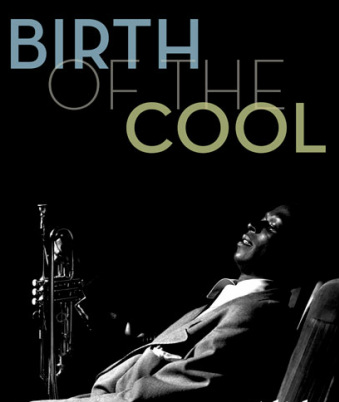
East Coast cool meets Brazilian Bossa Nova—Antonio Carlos Jobim and Gerry Mulligan in an informal setting at Mulligan’s New York apartment. Gerry Mulligan was “The” baritone sax player for virtually the whole of his musical career.  Some of which was no doubt due to the limited number of individuals playing the bulky instrument. He was an adventurous and innovative player, bandleader, arranger and composer.  He was also a seminal figure in one of jazz’s shining moments, “The birth of the cool”.  The Miles Davis sessions that took the heat of Be-Bop and shifted the focus from the blistering tempos and virtuosity that were the music's hallmarks, taking a more lyrical approach, something that exemplified Miles’ music throughout his career.
Picture
Mulligan wrote and arranged three of the pieces on the influential session, “Jeru”, “Rocker” and “Venus De Milo”, arranging three others as well.  His baritone sax was a core part of the band’s sound, and his lighter, breathier approach was a departure from the more traditional sound of players like Harry Carny, the influential longtime mainstay of Duke Ellington’s band.  

He was  one of the first horn players to perform in a piano-less trio,  a risky move that opened things up harmonically, enabling greater melodic freedom for the soloist, but, it also demanded a much higher level of interplay between the remaining players.  Without a piano or guitar to lay down the chords it would be easier for the soloist to get lost, it likewise placed greater demand on the bass player to fill in the gaps,  and it was more challenging for the audience as well. 

He formed a band with trumpeter/singer/ Chet Baker, a sort of super group of the West Coast Jazz scene, which became the cool, California equivalent of some of the best bands on hard Bop scene in New York.   

Antonio Carlos Jobim, the other half of this duo, was a composer, guitarist, pianist and arranger.  His songs; “Desifinado”, “Corcovada”, “Dindi”, “The Girl from Impanema”, “One note samba”, “How Insenstive”, “Meditation” and “Wave”, to name just a few, created a global phenomenon. His blend of lyrical melody and jazz harmony, melded to Afro/Brazilian rhythms crossed virtually every age, racial and ethnic boundary, selling millions of records in the process.  

 Jobim wasn't solely responsible for creating bossa nova, but, he wrote a good deal of the music's primary repertoire and shaped its sound in a way that has few parallels in modern music. His influence on jazz musicians alone would signal him as a creative force equal to many of the traditions most important figures.  

The clip here is of Jobim and Mulligan in Gerry’s apartment, with Jobim on piano and Mulligan on clarinet, instead of the usual baritone sax.  The clarinet offered a subtler sound befitting the music’s natural lyricism.  It appears to be from the late fifties or early sixties when bossa nova was at its peek. 

Gerry’s work as an arranger influenced Jobim—and Jobim’s music in turn influenced Mulligan.  You can hear Gerry trying to negotiate the unique rhythms and syncopation that are part of Jobim's composition, “One note samba”—giving us a window into the private world of musicians, and the kinds of intimate conversations had between diverse musical compatriots that are seldom seen by an audience. 

Mark Magula

1 Comment

Fred and Oscar

9/13/2012

0 Comments

 
You’ve got to love You Tube. It is an astonishing repository of  a lot of meaningless idiocy, but, it is no less a storehouse of some of the world’s great aesthetic and intellectual effort.  Here’s a wonderful example of exactly that, a duet between Fred Astaire, a man who needs no introduction, and Oscar Levant, a man of excessive gifts and equally obsessive traits.  

Levant was a friend and well know interpreter of George Gershwin’s, a classically trained piano virtuoso, raconteur and wit, and a clinically diagnosed obsessive compulsive. Levant covered his tracks well with a colorfully expressed personality and a devastating sense of humor. You can see all of this on display in his rambling introduction and interaction with his wife and Astaire, who sits patiently waiting for Levant to focus.  Once he does, he and Astaire play what sounds like an off the cuff version of Irving Berlin’s “Change Partners” including a false start. 

Fred Astaire, with his seemingly effortless artistry, shows once again why he is so highly regarded as a singer, and one of the finest interpreters of “The Great American songbook".  In fact, many of the greatest composers of America's greatest period of musical creativity wrote specifically for Astaire.  Watching the man perform here indicates why. There are no dramatic flourishes, just a straight to the heart of it, quiet statement of the lyric and melody, with a master’s gift for interpretation and phrasing. Levant likewise, plays with authority, almost overstating the case, but, quickly reins it in, keeping pace with Astaire’s more subtle reading.

The film clip could use a good digital cleanup, but, who can complain when two of the 20th centuries historic musical figures are caught for posterity, talking, playing, and reminiscing about Irving Berlin’s upcoming birthday and music.  It’s about as close as any of us will ever get to experiencing what it must have been like at a dinner party with some very talented guests in the 1920's or early 1930's when they were just starting out.  George and Ira, Oscar Levant, a young Fred and Estelle Astaire, maybe Irving Berlin or Cole Porter sharing stories and jamming on that new music called jazz. 

By the time of this performance, both were aging veterans whose public careers were on the wane.  Their talent, however, was undiminished—and if anything was all the richer. Suggesting that youth is a fine thing, but, age can bring a refinement of craft that can only come with time and talent.  The performance here makes it clear that Fred and Oscar had plenty of both. 

Mark Magula
0 Comments

Muddy Water - You can't Lose What You Never had

8/29/2012

0 Comments

 
No figure in the blues has ever had the effect that Muddy Waters had on the music.  Not B.B. King or any of the other Kings, Albert, Freddie or Earl.  Not even Robert Johnson, who was a primary influence on the man.  He wasn't the music's greatest singer or guitarist, although he was exceptional at both.  

Muddy was driven to excellence by a need to get out, move up and dominate the competition, with a natural ability for music and leadership.  It was  his savy as a leader with an eye for talent that set Muddy apart from most of his contemporaries.  He was, unlike many other musicians, happy to feature his band members, knowing that if they looked good, so did he. 

In his first band he assembled a group of head-cutters, Little Walter, who although barely a teenager, was a towering and innovative figure on his chosen instrument, the five & dime store harmonica; Otis Spann, who was widely regarded as the best blues piano player of the era, and Jimmie Rogers, a fine singer, guitarist and songwriter was a substantial artist in his own right.  

That was only the beginning.  He spent the next forty years raising up new generations of aspiring black and white blues-men, creating what has become a cornerstone of American music.  After Muddy nothing was ever the same.  He was a bridge from the American past, into a global future.

  The song, "You can't Lose What You Never had" is probably one of his best known and loved songs.  And it’s not surprising that it has seldom been covered.  Its a man's song, not some teenage angst filled tune for the forlorn, or aspiring amateurs eager to have a springboard in which to exhibit their guitar noodling ambitions—if you haven't lived, its best left alone.  If you do take your shot, you had better have the necessary talent and the brass to sing it.  If not, step aside, and listen to what a real man sounds like.

Mark Magula
0 Comments

Dick Curless - Portrait of a Country Singer

5/14/2012

0 Comments

 
Peter Guralnick talks about his work with the country legend Dick Curliss.
0 Comments

Lonnie Mack & The Charmaines

5/4/2012

0 Comments

 
Lonnie Mack worked as a session musician back in the sixties, including The Doors (Roadhouse Blues).  This record was made under the name "The Charmaines" what was supposed to be an all-girl guitar group.  It was really a Lonnie Mack record with some chicks singing a kind of Ray Charles and the Raylettes back-up thing. 

 As usual, Lonnie sounds like Lonnie and nobody else—and manages to turn a one off freak-show into a real record. The guy should have been a big star instead of just merely being a legend. On the other hand, legends last, while stars generally burn out pretty quick.  In the short term, however, he probably would have made a lot more cash and deservedly so. 

Keep an eye out for a longer piece on Lonnie Mack in the near future.  In the meantime, here’s a taste of The Mack attack—offering clear evidence of the man’s double duty as both singer and guitarist. 

Mark
0 Comments

Levon Helm

4/23/2012

0 Comments

 
Levon Helm - R.I.P. May 26, 1940 - April 19, 2012
Levon Helm was to rock and roll what John Wayne was to acting, a natural who made it look easy.  His singing sounded like Abe Lincoln by way of Henry Fonda and John Ford.  It was essential Americana, not country or folk, but, like an Okie intellectual.  

He took some very good songs written by Robbie Robertson and other band members and made them great by giving them what the overwhelming majority of 60’s and 70’s rock music lacked, effortless artistry that seemed incapable of posing.  

Helm had it as a drummer, singer and as an actor, making his performances seamless.  I can think of only handful of musicians and artists who could pull that off, John Lee Hooker, Jimmy Reed, John Wayne, when he had the right part and director, you can count them on two hands....maybe.  Levon was right there—one of a kind, an American original. 

Mark
0 Comments

Humble Pie - Live, on the "Old Grey Whistle Test" - Black Coffee

4/23/2012

0 Comments

 
Humble Pie, doing what they did best, playing some of the finest blues based, hard rock of the period, with the pint sized powerhouse, Steve Marriott fronting the band.  Clem Clemson replaced Peter Frampton on lead guitar and the band added a trio of gospel infused, R&B singers as back up.  It was the period in which "The Pie" probably entered their most creative phase as a group. Within a few years it was over. But not before they made some seriously good music.

Mark

0 Comments

They call the wind Mariah

4/20/2012

0 Comments

 
I remember hearing this song performed by everybody and their mother back in the day.  It seemed like Ed Sullivan, “The Godfather” of the television variety show back in the 50’s, 60’s and 70’s, had some movie or TV star sing this tune just about every other week.   It was classic Americana as imagined by Broadway.  

Like so much American myth making it synthesized the past and turned it into a big money stage production, and a successful one at that, although the movie was something of a flop.  Some bright producer thought that casting Lee Marvin and Clint Eastwood as leads might add some authenticity, in spite of the fact that neither could sing.  

Oh well, it was one of Hollywood’s last gasp attempts to cash in and bring back the good old days, before the industry was taken over by a bunch of Hippie punks and counter culture heroes.  Having said that, it’s still a heck of tune, if it had been in Oklahoma (the stage play not the state) it would have become legendary, or at least remembered!

Mark
0 Comments

Paco Delucia, Tico Tico

4/20/2012

0 Comments

 
Calling Paco Delucia a guitar player seems fitting, or maybe trivializing, depending on your perspective.  Let’s just say he can really play.  Flamenco music is its own peculiar animal.  Andres Segovia called it folk music.  That seems demeaning, but probably wasn’t intended to be.  Unlike classical music it’s essentially improvised; performers use devices like capo’s in order to facilitate key changes. That’s common in blues, country, bluegrass or American style folk music, but not music that is so closely associated with classical music, although that’s probably inaccurate. They share similar Spanish roots and draw on one another for inspiration, as well as some common techniques, but that’s about it.  

Flamenco’s use of unique, light gauge strings made from a combination of composite materials facilitates rapid passages and gives the guitar a lively aggressive attack.  Flamenco guitars are likewise made from different materials than classical guitars; cedar and maple are commonly used instead of the more traditional Rosewood and Spruce.  The effect is a brighter, less resonate sounding guitar with a more rapid tonal decay—qualities that generally aren’t considered desirable for acoustic guitars.  This combination, however, allows individual notes to be played with greater speed and rhythmic drive. 

Having said all of that, Paco can really play, his style is like Andalusian-folk music meets heavy metal-jazz and classical and is exciting, imaginative and pushes the boundaries of the tradition—something that he’s been doing for the past forty years.

Mark

0 Comments

Baden Powell Manha de Carnivale

4/20/2012

0 Comments

 
0 Comments
<<Previous
Forward>>

    Archives

    March 2014
    January 2014
    December 2013
    June 2013
    October 2012
    September 2012
    August 2012
    May 2012
    April 2012
    March 2012
    February 2012
    January 2012
    December 2011
    November 2011
    September 2011
    August 2011
    July 2011
    June 2011

    RSS Feed