How The Bird & Darwin Took Flight With an A7#9 Chord
How The Bird & Darwin Took Flight With an A7#9 Chord
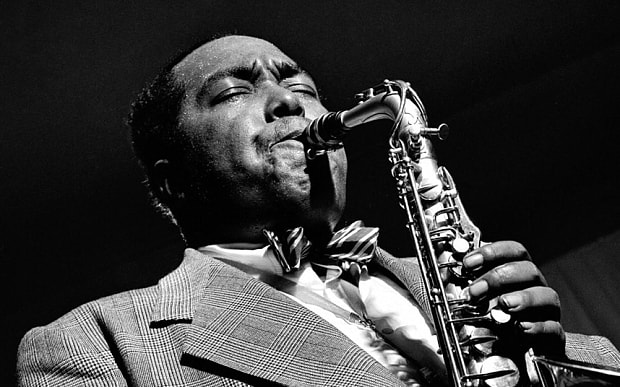
Lester Young, the great tenor saxophonist was the prime influence on alto saxophonist Charlie “Bird” Parker, who’s inventions as a player redefined jazz. It wasn’t just jazz, though, it was music in general. Parker's legato phrasing, his harmonic daring, his sense of rhythm, all, reshaped American music—global music—from Ornette Coleman to Jimi Hendrix, and beyond.
But, enough of the verbal fawning.
To simplify matters, Charlie Parker was a link in a chain. He was the continuation of a tradition. Parker’s innovations didn’t emerge out of whole cloth. He used what came before and built on it. So logical a progression was Parker’s work, that once it was heard, other musicians saw the light and ran with it, following his example, literally, by the millions. Parker was not alone in this pursuit. There was Dizzy Gillespie, Thelonious Monk, Kenny Clark, Charles Mingus, and too many others to name. Parker was, however, the catalyst. About that, few disagree.
This is how evolution appears to work, regardless of form. New information is accumulated, and the form, whether we're talking about a blues progression or a Finch’s beak change. The change in the beak of a finch, for example, doesn’t happen randomly, as Darwinist once believed, instead, it appears to change based on season and diet. Likewise, in jazz, a plain old A7 becomes an A7#9, altering the sound, making it a bit more dissonant, more modern, for lack of a better term, opening up fresh harmonic territory for the musician to explore. In both cases, however, “Random” has nothing to do with it, and that is increasingly what we see, at the micro level and macro level, regarding the evolution of life and information.
In other words, explaining how we get from a land-dwelling animal like a cow to an ocean-dwelling animal like a whale, requires tens of thousands, (Probably more like millions) of changes, both big and small, and they must all happen, more or less simultaneously, in order to proffer any real benefit for the animal. Otherwise, the cow goes into the ocean and quickly drowns. Because, under the best of circumstances, the cow is poorly adapted to ocean life. Simply put, “Randomness,” as an explanation, is no explanation at all.
The way in which Darwinian theory gets around this is to invoke time as a necessary component. Meaning; given enough time, all things are possible, even though there is no way to prove this to be true since it can’t be observed or even tested. Science begins to sound an awful lot like religion, in such cases. The fact that we can observe a virus adapting and changing, making it more resistant, doesn’t tell us why it’s happening. Or, even why it should. Only that it does.
Randomness, as an explanation, becomes essential, in understanding modern, evolutionary theory. Or, to put it another way, “Time + Chance = Shit Happens.” Not unlike a coin being tossed a million times, each time, turning up heads. Which, of course, doesn’t happen, except in theory. Theory, then, explains a lot, without really explaining anything that can be authenticated.
More than a little science works this way. Music, at least, allows us to follow evolution in real time. As an analogy about how evolution might work, using music or art—Picaso to Jackson Pollack—Charlie Parker to John Coltrane is useful, but far from a parallel example, except as an analog. In all such cases, a mind is at work, acting as the agent of change. The assumption that no mind can be observed in the evolution of life, by comparison, fails miserably, once we realize that getting from swing to Bebop pales by an extraordinary, probably incalculable factor, in terms of complexity. Randomness seems, at best, a damned poor analogy, but it is the only analog allowed in the scientific community. In that way, the distance between science and religion shrinks to nothing, as the new guard become the old guard, protecting their turf, just as the old guard musicians did when Charlie “Bird” Parker, first took flight, or when Copernicus said the earth was not the center of the universe. It is what we humans do, whether we're dealing with music, religion or science.
Mark Magula
Lester Young, the great tenor saxophonist was the prime influence on alto saxophonist Charlie “Bird” Parker, who’s inventions as a player redefined jazz. It wasn’t just jazz, though, it was music in general. Parker's legato phrasing, his harmonic daring, his sense of rhythm, all, reshaped American music—global music—from Ornette Coleman to Jimi Hendrix, and beyond.
But, enough of the verbal fawning.
To simplify matters, Charlie Parker was a link in a chain. He was the continuation of a tradition. Parker’s innovations didn’t emerge out of whole cloth. He used what came before and built on it. So logical a progression was Parker’s work, that once it was heard, other musicians saw the light and ran with it, following his example, literally, by the millions. Parker was not alone in this pursuit. There was Dizzy Gillespie, Thelonious Monk, Kenny Clark, Charles Mingus, and too many others to name. Parker was, however, the catalyst. About that, few disagree.
This is how evolution appears to work, regardless of form. New information is accumulated, and the form, whether we're talking about a blues progression or a Finch’s beak change. The change in the beak of a finch, for example, doesn’t happen randomly, as Darwinist once believed, instead, it appears to change based on season and diet. Likewise, in jazz, a plain old A7 becomes an A7#9, altering the sound, making it a bit more dissonant, more modern, for lack of a better term, opening up fresh harmonic territory for the musician to explore. In both cases, however, “Random” has nothing to do with it, and that is increasingly what we see, at the micro level and macro level, regarding the evolution of life and information.
In other words, explaining how we get from a land-dwelling animal like a cow to an ocean-dwelling animal like a whale, requires tens of thousands, (Probably more like millions) of changes, both big and small, and they must all happen, more or less simultaneously, in order to proffer any real benefit for the animal. Otherwise, the cow goes into the ocean and quickly drowns. Because, under the best of circumstances, the cow is poorly adapted to ocean life. Simply put, “Randomness,” as an explanation, is no explanation at all.
The way in which Darwinian theory gets around this is to invoke time as a necessary component. Meaning; given enough time, all things are possible, even though there is no way to prove this to be true since it can’t be observed or even tested. Science begins to sound an awful lot like religion, in such cases. The fact that we can observe a virus adapting and changing, making it more resistant, doesn’t tell us why it’s happening. Or, even why it should. Only that it does.
Randomness, as an explanation, becomes essential, in understanding modern, evolutionary theory. Or, to put it another way, “Time + Chance = Shit Happens.” Not unlike a coin being tossed a million times, each time, turning up heads. Which, of course, doesn’t happen, except in theory. Theory, then, explains a lot, without really explaining anything that can be authenticated.
More than a little science works this way. Music, at least, allows us to follow evolution in real time. As an analogy about how evolution might work, using music or art—Picaso to Jackson Pollack—Charlie Parker to John Coltrane is useful, but far from a parallel example, except as an analog. In all such cases, a mind is at work, acting as the agent of change. The assumption that no mind can be observed in the evolution of life, by comparison, fails miserably, once we realize that getting from swing to Bebop pales by an extraordinary, probably incalculable factor, in terms of complexity. Randomness seems, at best, a damned poor analogy, but it is the only analog allowed in the scientific community. In that way, the distance between science and religion shrinks to nothing, as the new guard become the old guard, protecting their turf, just as the old guard musicians did when Charlie “Bird” Parker, first took flight, or when Copernicus said the earth was not the center of the universe. It is what we humans do, whether we're dealing with music, religion or science.
Mark Magula